
Wood Burning, Bonfires and Air Quality
Ipswich Borough Council is committed to improving air quality and protecting public health.
Smoke from wood burners, open fires and bonfires is a significant source of fine particulate matter (PM2.5), a harmful form of air pollution. These tiny particles can enter the lungs and bloodstream and have been linked to heart disease, stroke, respiratory illnesses and other serious health conditions.Take a look at our Air Pollution and Health for more information on the health impacts of air pollution.
We receive a substantial number of complaints each year relating to smoke from domestic burning activities, particularly wood burners and garden bonfires. By making informed choices about when and what we burn, we can all help improve air quality in Ipswich.
Burning at Home and Indoor Air Quality
Ipswich Borough Council has worked with the Department for Environment, Food and Rural Affairs (Defra) to better understand how burning fuels at home affects indoor air quality.
Monitoring undertaken in Ipswich homes showed that particulate pollution levels increase significantly when wood burners, stoves and open fires are in use. While average indoor air quality may remain relatively low over a longer period, burning can create short-term pollution spikes many times higher than background levels. Local monitoring found that all fuels tested increased indoor particulate pollution when burned.
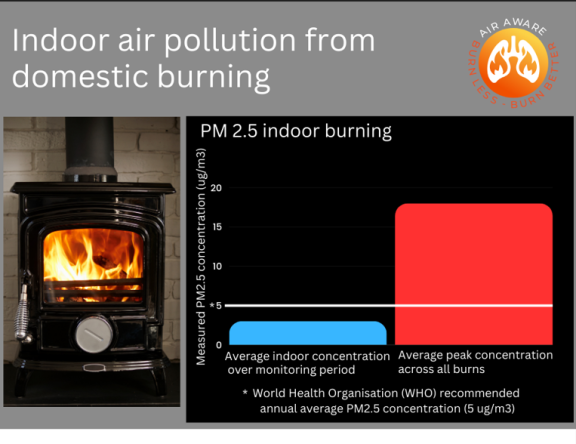
These findings highlight that pollution from domestic burning not only affects outdoor air quality but can also affect the air inside your home.
Being air aware and burning less, where possible, is one of the simplest ways to protect your health, improve indoor air quality and reduce pollution in your community.
Do I Need to Light a Fire?
The simplest and most effective way to reduce air pollution from domestic burning is to burn less.
Before lighting a stove, wood burner or open fire, ask yourself:
- Is my home already warm enough?
- Am I burning for heating or mainly for atmosphere?
- Could I use an alternative heating source instead?
Reducing the frequency of burning can:
- Improve air quality inside your home.
- Reduce pollution affecting neighbours and the wider community.
- Reduce your exposure to harmful particulate matter.
- Save money on fuel costs.
Even modern stoves and approved appliances produce particulate pollution when in use.

Using a Wood Burner or Open Fire Responsibly
If you choose to burn at home, there are simple steps you can take to minimise smoke and improve efficiency.
Burn Dry Wood
Always use wood with a moisture content of 20% or less.
Burning wet or freshly cut wood:
- Produces more smoke and pollution.
- Gives out less heat.
- Causes soot and tar deposits in chimneys and flues.
- Increases the risk of chimney fires.
Look for the Ready to Burn logo when purchasing firewood.
Choose Cleaner Fuels
Ipswich's domestic burning research compared a range of commonly used fuels and found that all fuels increased indoor particulate pollution when burned. However, some fuels produced substantially higher pollution levels than others. Local monitoring suggested that untreated dry wood and heat logs generally produced lower pollution peaks than coal, smokeless coal products, pallet wood and treated wood.
Where burning is necessary, consider:
✅ Ready to Burn certified wood
✅ Untreated dry wood
✅ Heat logs suitable for your appliance
✅ Approved smokeless fuels where appropriate. A list of approved smokeless fuels is available on the HETAS website
Avoid:
❌ Wet or unseasoned wood
❌ Treated, painted or varnished wood
❌ Pallet wood
❌ Household waste
❌ Cardboard and packaging
❌ Plastics, rubber and other rubbish
These materials can release harmful pollutants and toxic fumes into your home and the local environment.
Operate Your Stove Efficiently
Poor operating practices can significantly increase emissions.
To reduce smoke and improve efficiency:
- Follow the manufacturer's instructions.
- Ensure there is enough airflow for efficient combustion.
- Avoid allowing fires to smoulder for long periods.
- Avoid repeatedly opening the stove door.
- Keep the appliance door closed whenever possible.
- Do not damp down a fire overnight.
Ipswich monitoring suggests that opening stove doors and tending fires can contribute to short-term spikes in indoor particulate pollution
Maintain Your Appliance
Regular maintenance helps your appliance operate safely and efficiently.
We recommend:
- Having your chimney swept regularly by a qualified chimney sweep.
- Servicing your appliance in accordance with manufacturer recommendations.
- Checking seals, vents and flues regularly.
Regular maintenance reduces emissions and helps prevent chimney fires.
Buying a New Stove
If you are considering purchasing a new stove:
- Choose a modern Ecodesign-compliant appliance.
- Check whether the appliance is DEFRA-exempt if you live within a Smoke Control Area.
- Use a suitably qualified installer, such as a HETAS registered installer.
Before purchasing a stove, consider whether cleaner forms of heating could meet your needs.
Further information can be found on the HETAS website.
Ready to Burn Fuel and Domestic Fuel Regulations
The Air Quality (Domestic Solid Fuels Standards) (England) Regulations 2020 introduced standards intended to reduce pollution from domestic burning.
Under these regulations:
- Wood sold in quantities of less than 2m³ must contain no more than 20% moisture and be certified as Ready to Burn.
- Larger quantities of wood must be supplied with advice on seasoning and storage.
- Manufactured solid fuels must meet smoke and sulphur emission standards.
- Traditional house coal is no longer available for domestic sale.
The Ready to Burn certification scheme is administered by Woodsure.
You can find local certified suppliers through the Woodsure website. Find a local supplier.
Businesses and residents requiring advice on domestic fuel sales can contact Suffolk Trading Standards.Trading Standards can be contacted via their reporting website using the online enquiry form or by calling 0808 223 1133.
Clean Air Night
Ipswich Borough Council supports the national Clean Air Night campaign.
Clean Air Night raises awareness of how burning fuels at home affects both indoor and outdoor air quality and encourages people to think carefully about whether they need to light a fire.
Did you know that burning fuels at home is one of the largest sources of particulate matter pollution in the UK? Research also shows that burning can expose household members to harmful pollution inside the home.
The campaign encourages residents to:
- Burn less where possible.
- Use cleaner fuels when burning is necessary.
- Operate stoves correctly.
- Reduce exposure to harmful particulate pollution.
- Consider cleaner alternatives for heating.
For more information visit the Clean Air Hub and search for #CleanAirNight.
Garden Bonfires
Ipswich Borough Council strongly discourages bonfires as a method of disposing of waste.
Smoke from bonfires can:
- Affect your neighbours' enjoyment of their homes and gardens.
- Prevent people opening windows or drying washing outdoors.
- Cause nuisance complaints.
- Reduce visibility.
- Contribute to poor air quality.
- Expose people to harmful pollutants.
Burning damp garden waste, plastics, rubber, painted materials or treated wood can create particularly harmful smoke and poisonous fumes.
Composting or using a garden waste collection service is usually a better alternative.
If You Decide to Have a Bonfire
Please:
- Consider whether a bonfire is really necessary.
- Inform nearby neighbours beforehand.
- Burn only dry, untreated garden waste.
- Burn material quickly in small quantities in a hot fire so the minimum amount of smoke is created. Choose your bonfire site carefully, well away from trees, fences and windows.
- Avoid lighting fires when weather conditions may cause smoke to linger.
- Never burn plastics, household rubbish, rubber, treated timber or painted wood.
- Keep water nearby.
- Never leave a bonfire unattended. Beware of attempting bonfires on very windy days as it can easily get out of control.
- Fully extinguish the fire when finished.
Avoid allowing bonfires to smoulder for long periods or continue burning into the evening.
Complaints About Smoke
There are no specific local byelaws that prohibit occasional bonfires. However, Ipswich Borough Council has a duty under the Environmental Protection Act 1990 to investigate complaints that may amount to a statutory nuisance.
Smoke from bonfires, open fires or wood-burning appliances may be considered a statutory nuisance where it causes an unreasonable and persistent interference with the use and enjoyment of neighbouring properties.
Where evidence demonstrates that a statutory nuisance exists, the Council may consider formal action.
If smoke from a bonfire, open fire or wood-burning appliance is affecting you, please contact the Environmental Protection Team